
Public Lands and the Climate Crisis
Carbon & Fossil Fuel Extraction
Oil and gas drilling on public lands leaves the biggest climate mark of anything that happens out there. Roughly a quarter of the country's greenhouse gas emissions trace back to fuels pulled from federally managed ground, and the effects are concentrated in a handful of western states, with Wyoming carrying by far the largest share. Natural gas escapes at the wellhead — vented on purpose, burned off in flares, or leaking from valves and pipes. Independent measurements in places like the Permian Basin suggest the real losses run well above official estimates. The rules meant to limit this waste have been rewritten repeatedly as administrations change, most recently in 2026.
The problem doesn't end when a well stops producing. Old wells whose owners have gone bankrupt or disappeared become the public's responsibility, and they keep leaking methane — quietly, sometimes for decades. Nobody knows how many there are. Only a small fraction have been located and documented, and only a tiny sliver of those have ever actually been measured, which is why federal estimates of how much they emit span such a wide range. Thousands sit on federal land. Congress set aside money to plug them, but the cost of dealing with just the wells we know about already exceeds the funding available, and undocumented wells are still being found.
Carbon & Forests
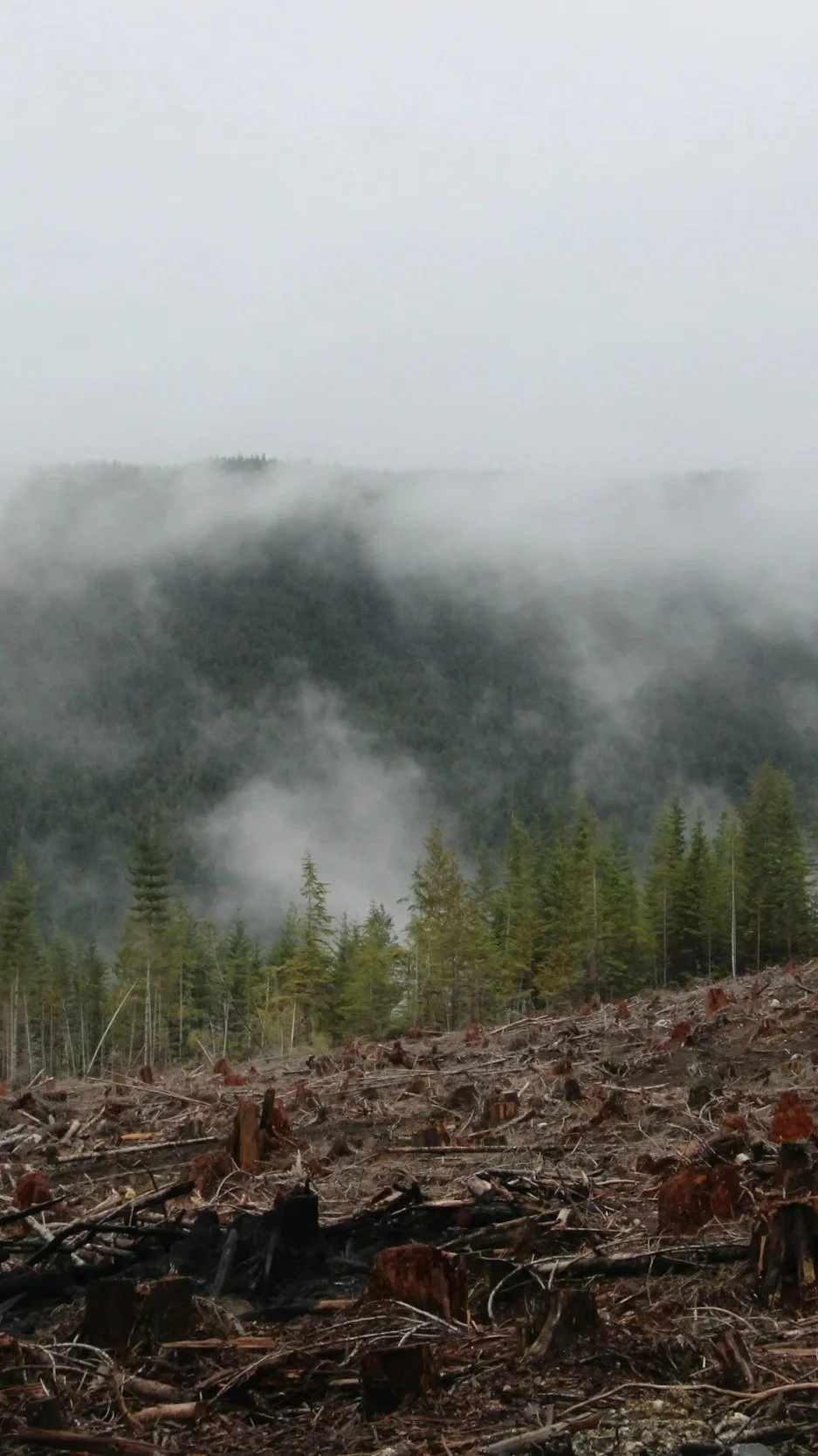
Forests are one of the planet’s biggest carbon sinks, drawing CO2 out of the air and storing it in trees, vegetation, and soil. Meanwhile, logging forests is one of the world’s largest carbon sources contributing to the climate crisis.
Any serious attempt to address global—and local—climate change must start with protecting and preserving forests as carbon sinks. Establishing public lands as Climate Refuges is perhaps the lowest-hanging fruit for making a real dent in preventing worsening climate chaos.
Tragically, complicating this effort are industry, government, land management NGO, and media disinformation campaigns falsely claiming forests emit more carbon than they store due to wildfires and/or native insects, and therefore must be cut down. Needless to say, these are blatant lies created by fudging scientific data or concocting propaganda out of whole cloth.
Even in the most severe wildfire, the vast majority of carbon—around 97 percent—remains for decades in tree trunks, branches, roots, and soil. A dead snag can stand for many decades, providing crucial wildlife habitat, preventing soil erosion, and shading future tree growth.
Most of that carbon sticks around when the tree falls to the ground as a downed log, providing more habitat, and prevention of erosion, and, as it decays into soil, vital nutrients. Any carbon released back into the atmosphere will be reabsorbed by subsequent forest growth, made possible from that original dead tree.
On the other hand, the forest products industry and its government and NGO partners processing trees into lumber loses the vast majority of carbon almost immediately, and the small remainder only lasts so long as that lumber remains in use, before it’s inevitably sent to the landfill. Even worse, burning trees or woody material in polluting “biomass” energy incinerators immediately spews that carbon back up into the atmosphere.
It’s time those who are serious about climate change prioritize protecting forests and opposing their destruction.
Carbon & Livestock Grazing
Cattle emit methane directly, from digestion and from manure, plus nitrous oxide as manure decomposes. They also reshape the land they graze: stripping native plants, decimating sensitive riparian areas, compacting and eroding soils, and opening ground for invasive weeds, which turns ecosystems that once stored carbon into places that release it. Thinner vegetation leaves soils hotter and drier, so grazed ecosystems are impacted by a warming climate more sharply than ungrazed ones. On western public lands the scale is larger than it looks — grazing is the most widespread use of these lands.
Holistic Grazing, popularized by Allan Savory, claims that intensive rotational grazing can reverse this, and even return atmospheric CO₂ to pre-industrial levels, does not survive scrutiny. Grasslands west of the Rockies never evolved under dense herds of large hooved animals, ungrazed bunchgrasses are not dying without grazers, and hoof action compacts soils and destroys the biological crusts that hold arid ground together.
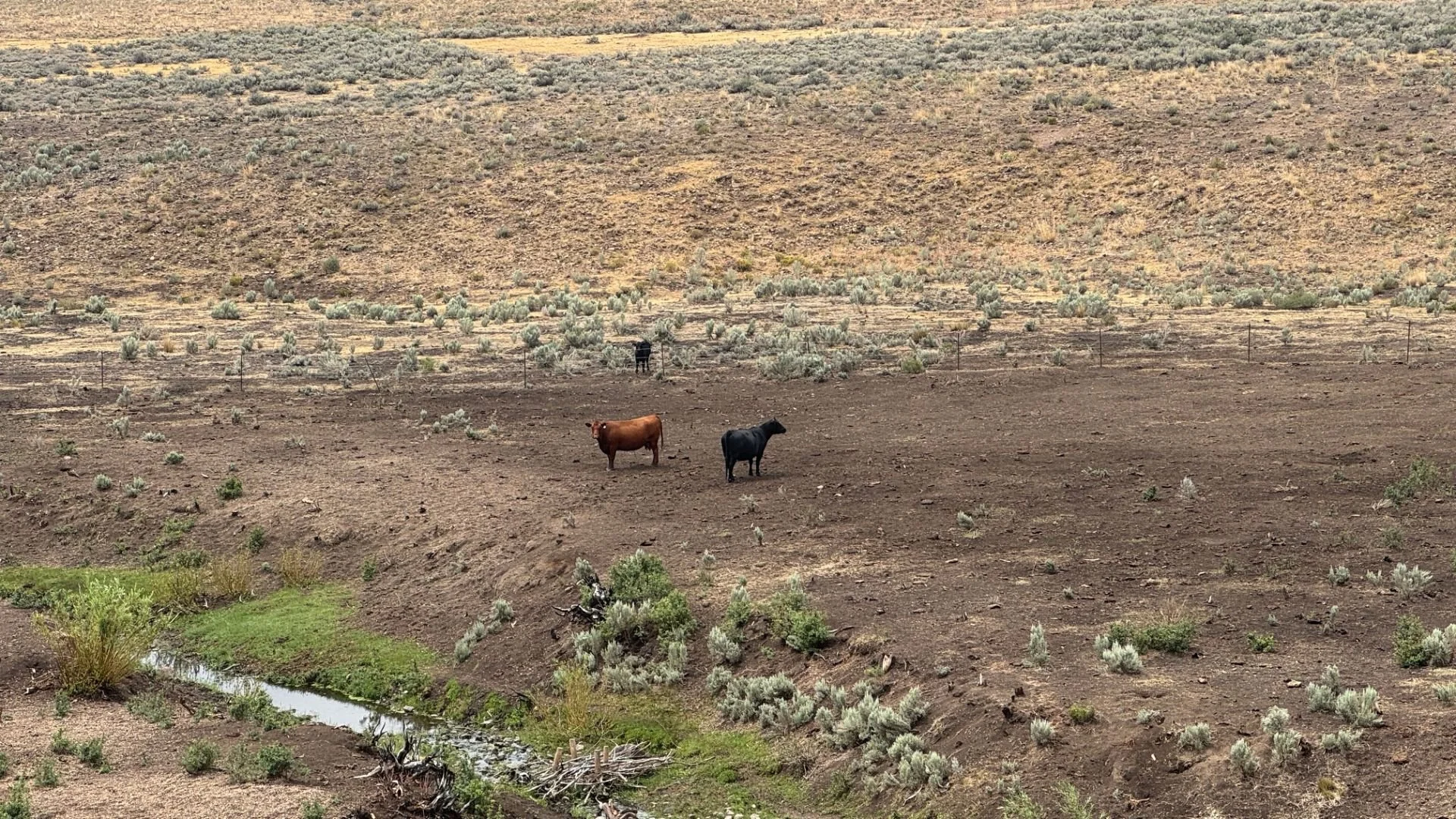
The decisive point is that whenever grazed land does improve, the variable that actually changed is stocking rate, not rotation. Reviews comparing rotational with continuous grazing at equal stocking rates found no advantage; the studies most often cited in Savory's favor ran their holistic paddocks at light stocking and found them indistinguishable from lightly grazed or ungrazed controls.
The carbon math fails too: improved grazing sequesters roughly 0.35 tonnes of carbon per hectare per year, about a seventh of the rate Savory's calculation assumes, and it tapers off as soils saturate — nowhere near enough to offset the methane the added cattle would produce. Not to mention, these forms of intensive grazing are near impossible to implement on the vast public lands grazing allotments across the West.
Photo: Olaf Radzins