
Multiple Use (Abuse)
what is multiple use??
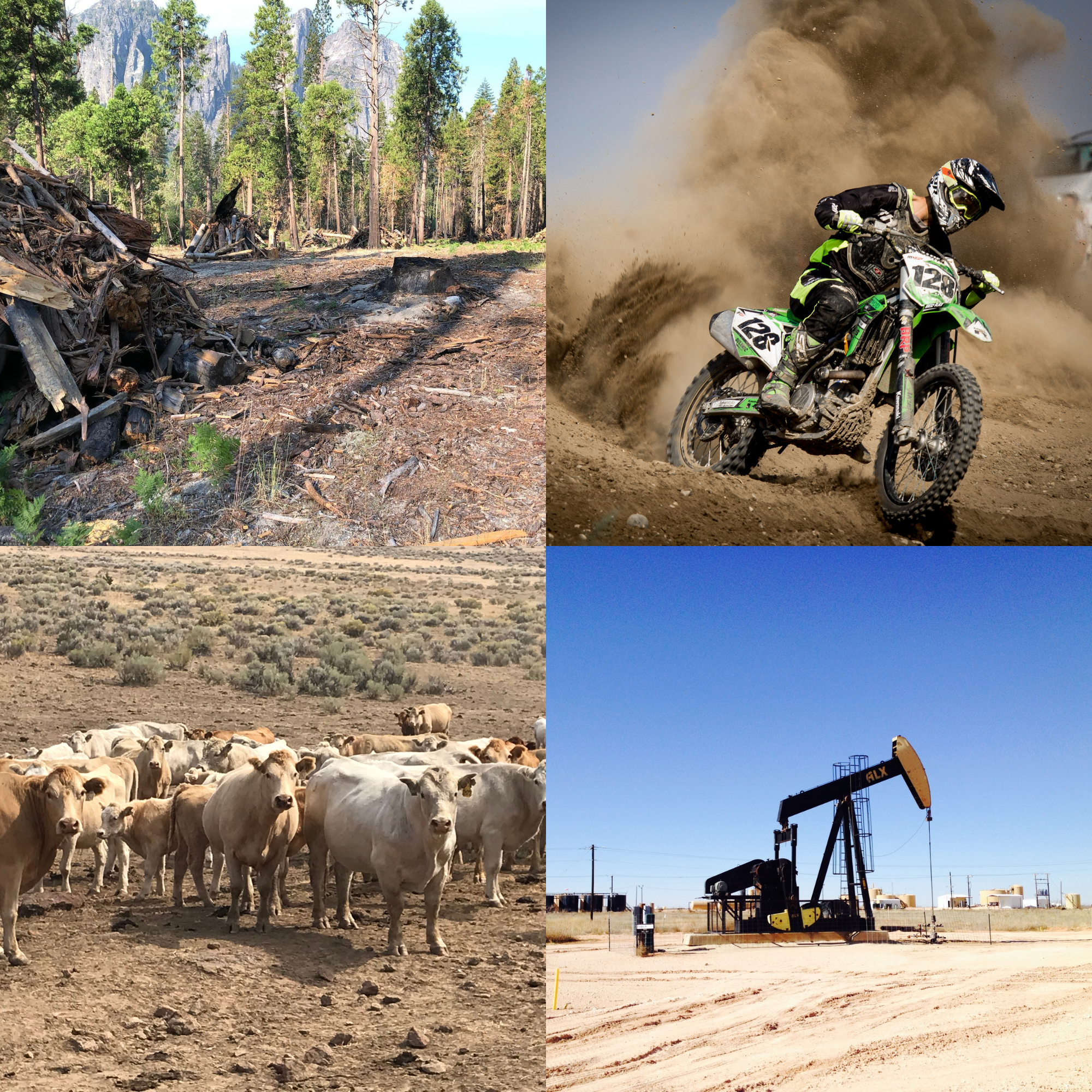
“Multiple use” is a land-management framework irrevocably defined by and tied to commercial exploitation that directs federal agencies to manage public lands for several different purposes at the same time, including livestock grazing, logging, mining, energy development, watershed protection, recreation, and wildlife habitat.
Although the concept is often presented as a balanced and reasonable approach, in practice, it has meant prioritizing economic extraction with conservation treated as secondary—if at all. Its legacy is abundantly clear across the public lands.
Multiple use was formally ushered into federal law through the Multiple-Use Sustained-Yield Act of 1960, which governs National Forests, and the Federal Land Policy and Management Act of 1976 (FLPMA), which applies to Bureau of Land Management lands.
FLPMA defined multiple use as managing lands so they are utilized in combinations that best meet present and future needs. In theory, this language should allow land managers to limit or exclude extractive activities where they conflict with ecological health or imperiled wildlife. In reality, however, multiple use has been re-imagined as an industry-accomodative framework rather than an ecologically protective one, allowing agencies to justify nearly any activity as long as it could be labeled a “use,” while treating conservation as discretionary rather than mandatory.
Why Multiple Use Has Failed
We believe multiple use has failed because it lacks enforceable ecological limits and treats environmental degradation as an acceptable byproduct of land management rather than a threshold that cannot be crossed. Some of the multiple uses (related to conservation) are chronically neglected, while multiple uses related to generating private profits from public lands have been prioritized. Politics and industry control over land management agencies have hamstrung the sort of discretion necessary to adjust course. For agencies, the easy way out has been deference to powerful interests—not public accountability.
The doctrine does not establish clear baselines for ecosystem health, nor does it require agencies to halt or remove damaging uses once harm is documented. Instead, land managers are left to weigh extraction and conservation as competing interests, even when clear evidence shows that certain uses and intensities are fundamentally incompatible with long-term ecosystem function and health.
The result is a system where legacy uses persist by default, and where “balance” is invoked even as soils erode, watersheds are degraded, forests are chopped down, and native species decline right before our eyes.
The structural flaw of multiple use is that it evaluates impacts one activity at a time while ignoring cumulative and compounding effects. Grazing, logging, mining, road building, recreation, and energy development are considered in isolation. Because each individual use is framed as permissible in and of themselves, land management agencies rarely confront the reality that the sum of these uses exceeds ecological capacity.
This piecemeal approach has allowed degradation to accumulate, normalizing damage until altered landscapes—cheatgrass monocultures, impaired streams, fragmented forests—are treated as the baseline condition rather than seen as management failures.
The failure of multiple use becomes most apparent in FLPMA’s requirement that agencies prevent “unnecessary or undue degradation.” Because Congress left those terms undefined, agencies interpreted them so narrowly that the mandate produced virtually no meaningful conservation outcomes. If “unnecessary” were defined as any activity that could be carried out in a lower-impact way or in a less damaging location, and “undue” as any activity that causes population declines in sensitive species, significant habitat loss, or chronic failure to meet land health standards, multiple use might have evolved into a system that actually constrained harmful practices.
Instead, vague standards allowed degradation to become normalized. Using ecological conditions as the measuring stick for allowable uses would align land management with the original intent of multiple use—forcing commercial activities to be restrained based on ecological limits and realities.
The bottom line is that multiple use, as currently practiced, cannot deliver healthy, resilient public lands. Without redefining conservation and ecosystem integrity as prerequisites rather than competing “uses,” this framework will continue to produce ecological harm unless reformed.
Moving Beyond Multiple Use & Protecting the Public Trust
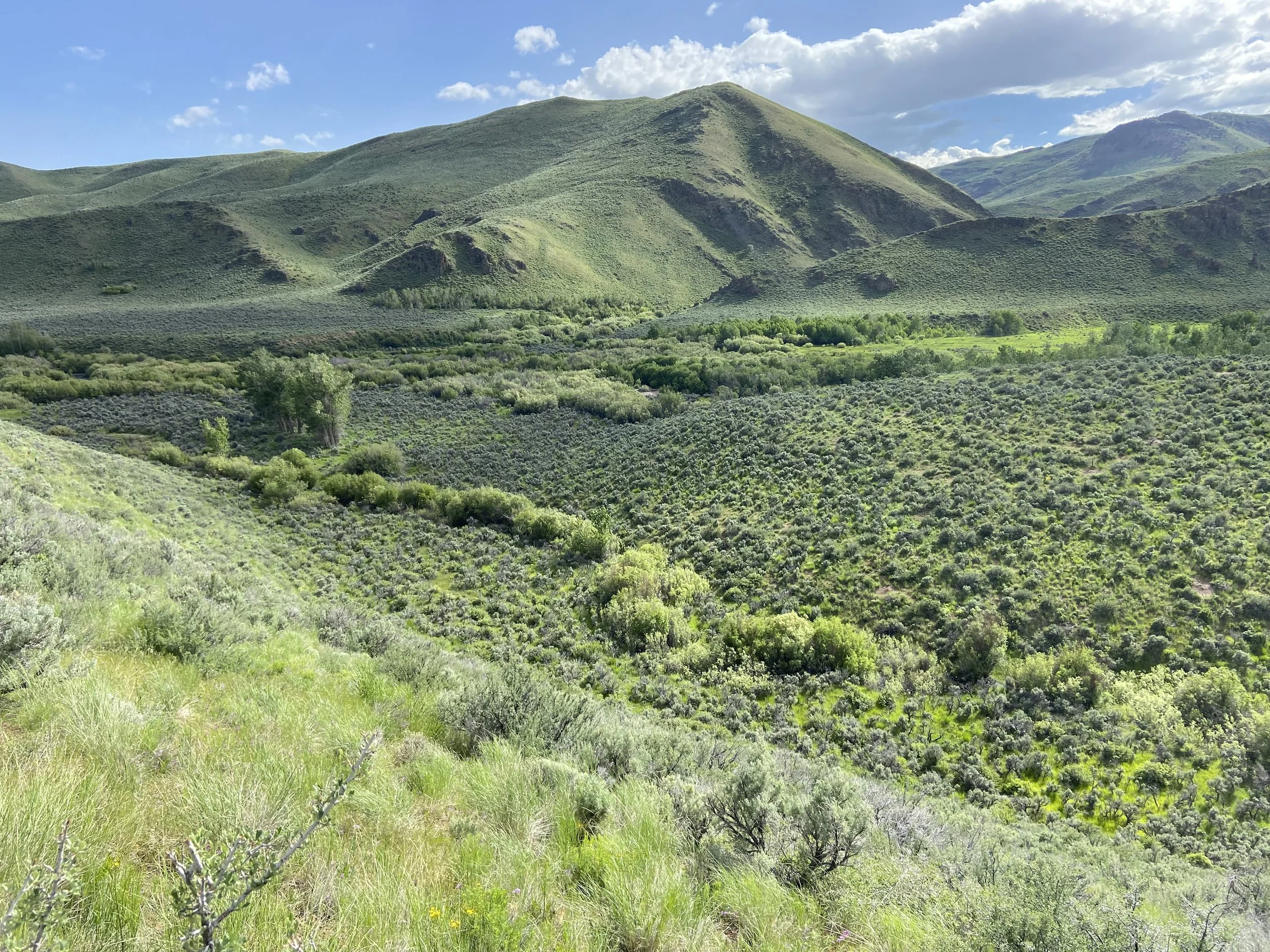
A brand new policy framework would flip today’s priorities by placing wildlife, biodiversity, ecosystem integrity, and the life-support functions of public lands and waters at the center of public lands management. Under this approach, clean water, clean air, healthy soils, intact habitats, and carbon capture and storage would be treated not as competing “uses,” but as foundational public values that must be protected, prerequisites that must be achieved. Land managers would be required to establish clear ecological baselines and recovery targets, using native species abundance, ecological diversity, watershed condition, soil stability, and climate resilience as the primary indicators of success.
Under this framework, activities would be evaluated not by whether they can coexist politically, but by whether they measurably maintain or improve ecological conditions over time. Wildlife and biodiversity would serve as the yardstick for allowable management, meaning that population declines, habitat loss, or failure to meet land health standards would trigger mandatory changes in use.
As opposed to most privately held ground, public lands offer us a positive vision of what the future could hold.
cHECK OUT THE OTHER ISSUES we’re tackling.